Why Single Cell RNA Sequencing?
Single-cell RNA-seq has quickly become one of the most powerful and widely used approaches for overcoming the limitations of bulk RNA-seq data. While the overall concept is similar, the key difference is resolution: instead of averaging signals across a mixed population, single-cell RNA-seq captures the transcriptome of every individual cell. This lets you explore cellular heterogeneity within your sample and uncover the diversity of RNA transcripts present in each cell.
Impact on Campus
The purpose of the Single-Cell RNA Sequencing Workshop is to equip researchers on our campus with the practical skills needed to perform single-cell RNA-seq analysis—from sample preparation all the way to producing publication-quality figures.
Through a hands-on, step-by-step format, participants will learn how to align sequencing data to the correct reference genome, import and process the data in R, and create informative visualizations such as UMAPs, heatmaps, and volcano plots.
The workshop will also introduce advanced downstream analyses, including ligand–receptor interaction, pathway enrichment, and pseudotime trajectory analysis, enabling participants to fully interpret and explore their single-cell datasets.
Overview of Workshop
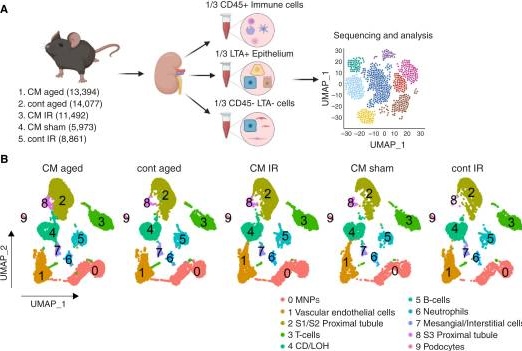
Our 2025 workshop will be divided into three sessions held over the course of a week. The first session will focus on sample preparation, sequencing, and quality control techniques.
In the second session, participants will work with the newly generated data from session one. They will learn how to import their data into R, build and manage a Seurat object, perform cell clustering, and carry out cell-type annotation.
The final session will provide hands-on experience with more advanced analyses, including pseudotime trajectory inference, cell–cell communication, and pathway or transcription factor activity analysis.